Your first five minutes
Kubermeister reads the kubeconfig you already have. If kubectl get pods works in your terminal,
the app works too.
1. Check the connection
Section titled “1. Check the connection”The top bar tells you which context you are on. If something is wrong with the kubeconfig or the context, a notice appears there with the ways out: try again, choose a different kubeconfig, or use the default. The app shell always loads, even when no cluster will answer.
2. Find a workload
Section titled “2. Find a workload”Open Workloads → Deployments. The list is live — it watches the API server rather than polling, so a rollout appears as it happens. Type in the search box to narrow to the rows you want.
3. Read its logs
Section titled “3. Read its logs”Open a deployment and go to its Logs tab. It is already following, and it is following every pod the deployment owns at once, merged in arrival order and coloured by pod. There is no API call for “the logs of this deployment”, so the app opens one stream per pod and restarts the set when the pods change.
Search narrows the console. Turn on Highlight in the View menu if you would rather keep every line and mark the matches where they sit.
4. Shell into a pod
Section titled “4. Shell into a pod”Open one of its pods and choose the Shell tab. The session opens with the tab and ends when you leave, which is how a shell is closed — nothing is left attached in the background.
5. Forward a port
Section titled “5. Forward a port”From a Service or a pod, start a port forward. Forwards are listed in the top bar and stopped from there, wherever you started them. A forward aimed at a Service resolves a ready endpoint per connection, so the next rollout does not end it.
6. Look at the cluster
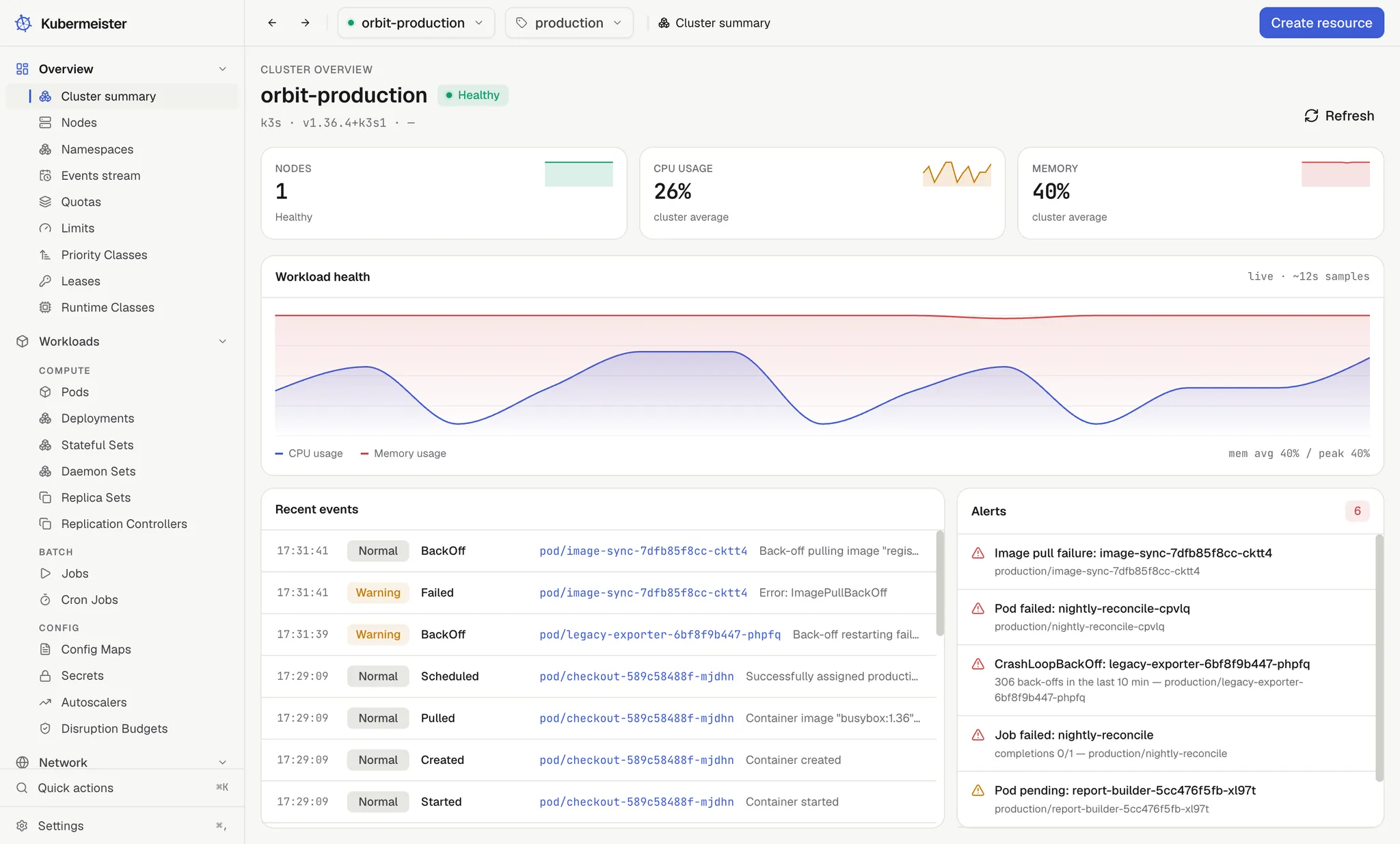
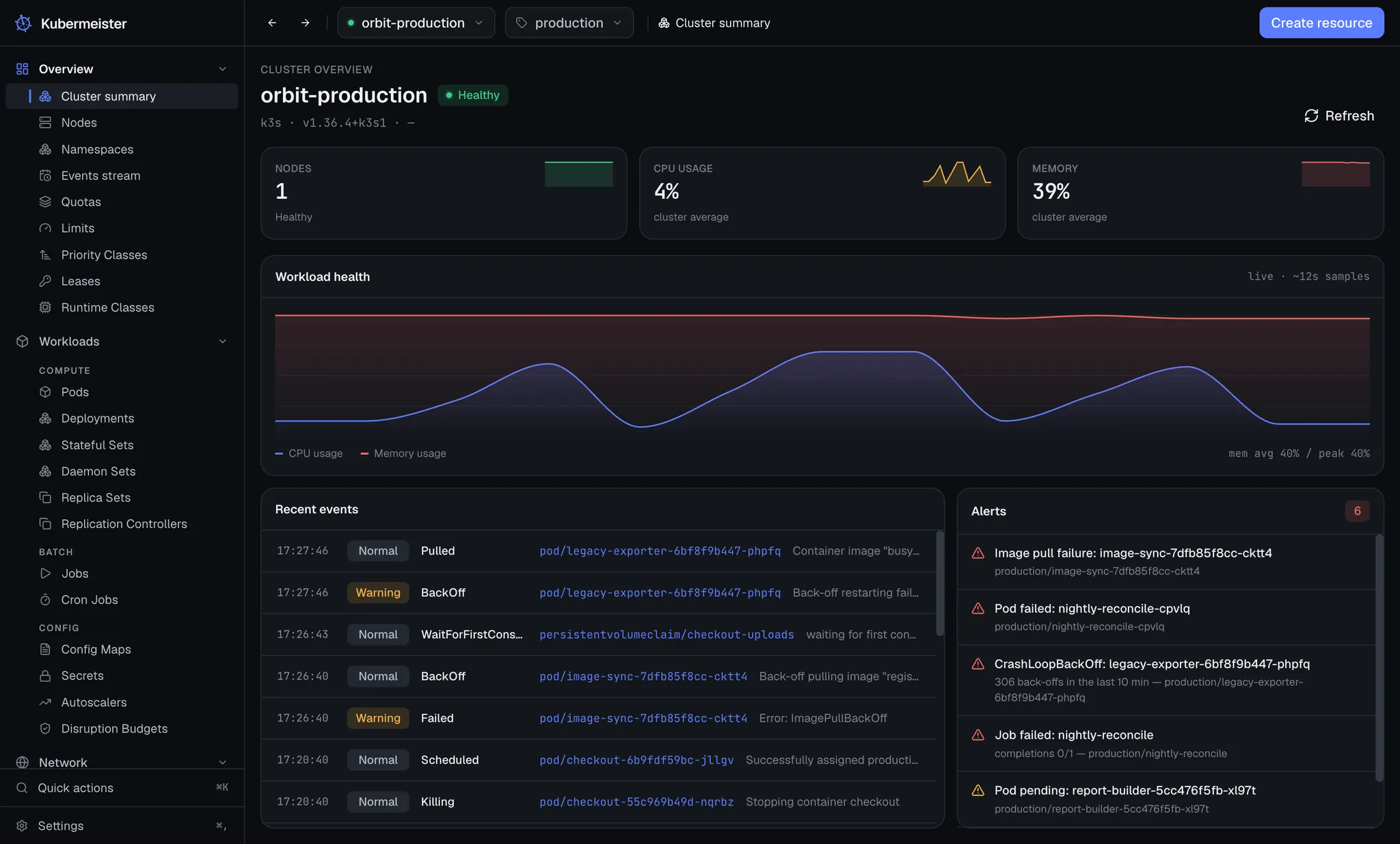
Section titled “6. Look at the cluster”Cluster → Summary puts node and pod health, usage and recent events on one screen. The usage charts are sampled while the app is open — they start empty on every launch and reset when you switch context, so they never claim history the app does not have.
Contexts and namespaces, or jump to logs.