Helm releases
Helm has no API of its own. A release is a Secret of type helm.sh/release.v1 whose release
field is base64(gzip(json)), base64’d again by the API, with one Secret per revision named
sh.helm.release.v1.<name>.v<n>.
Kubermeister decodes those Secrets. That is the whole mechanism, and it is why the app needs no Helm binary and no Tiller-like component.
What you see
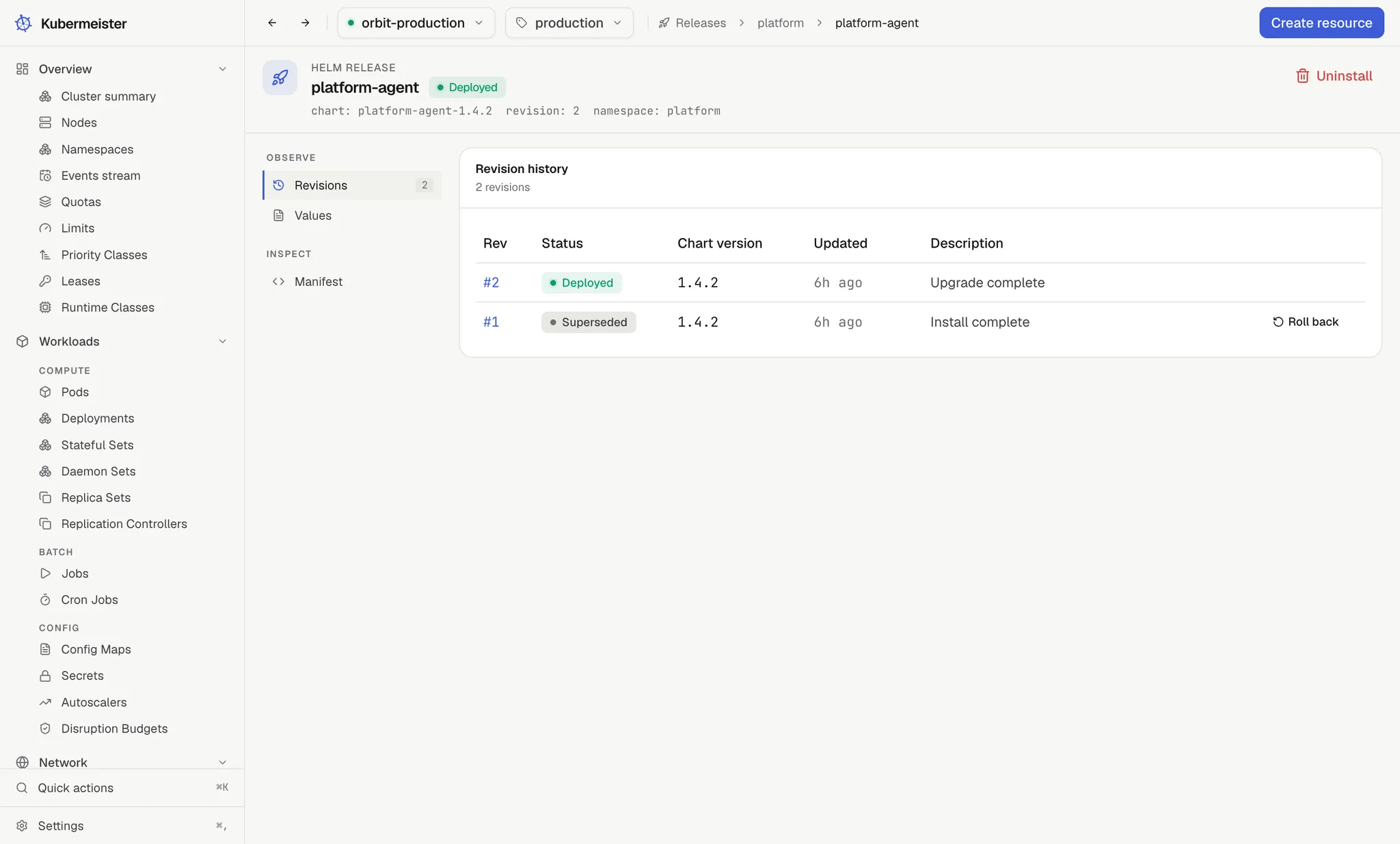
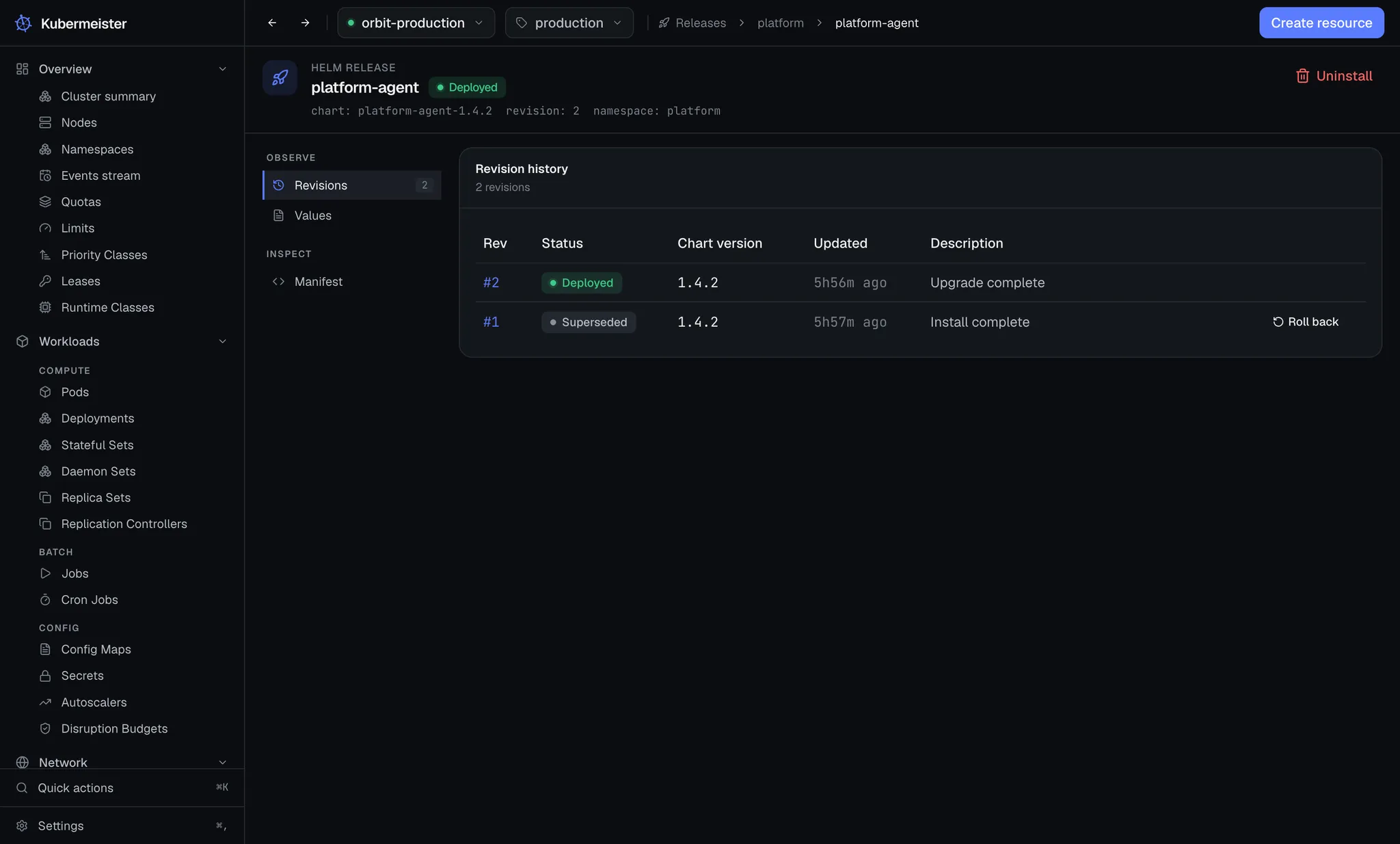
Section titled “What you see”Releases in the selected namespace, each with its chart, app version, status and revision. Open one for its revision history, its values, and the manifest each revision rendered.
Rolling back
Section titled “Rolling back”A rollback re-applies the target revision’s objects, removes what that revision never had, and then keeps Helm’s own bookkeeping straight: the same Secret names, labels and status words Helm uses.
It records the result as a new revision. Helm numbers forward and never rewinds, so a rollback from revision 5 to revision 3 produces revision 6, and revision 5 is marked superseded.
The point of all that care is simple: a release this app rolls back is still one the Helm CLI can read and act on.
Uninstalling
Section titled “Uninstalling”An uninstall deletes the current revision’s objects and then either forgets the history or marks it
uninstalled, matching what helm uninstall does with and without --keep-history.
Objects Helm is told to keep
Section titled “Objects Helm is told to keep”An object annotated helm.sh/resource-policy: keep is never deleted by a rollback or an uninstall,
and the app counts them back to you so you know what was left behind.
Chart repositories
Section titled “Chart repositories”Configured chart repositories are a fact about your install, not about the cluster you happen to be pointed at, so they live in app settings and survive a context switch. See settings.