Cluster alerts
Alerts are derived from cluster state, cluster-wide, with thresholds the app decides rather than ones you tune. They are meant to answer “is anything obviously wrong” on a screen you already have open.
What is found, and how
Section titled “What is found, and how”The interesting part is that pod alerts never read every pod:
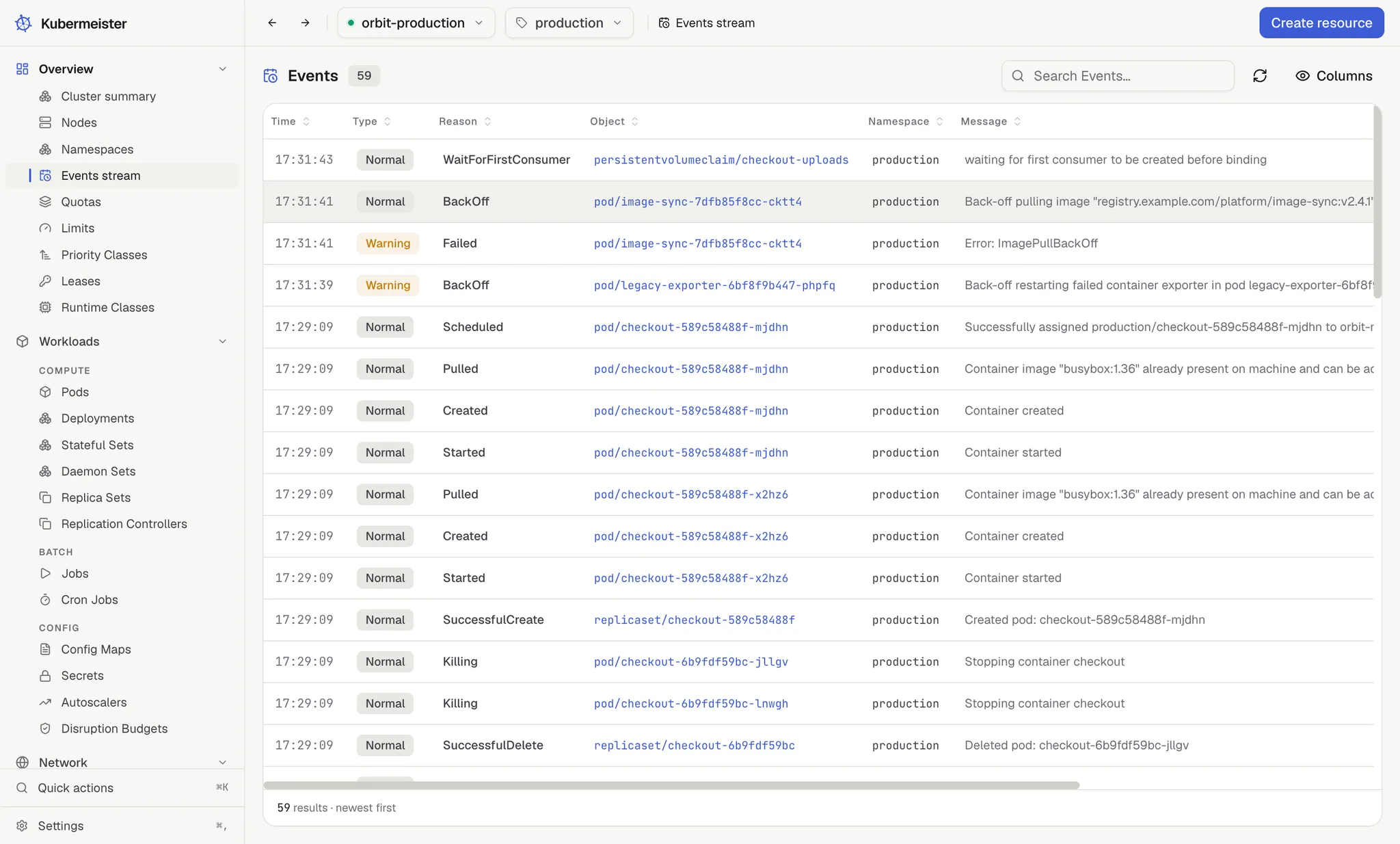
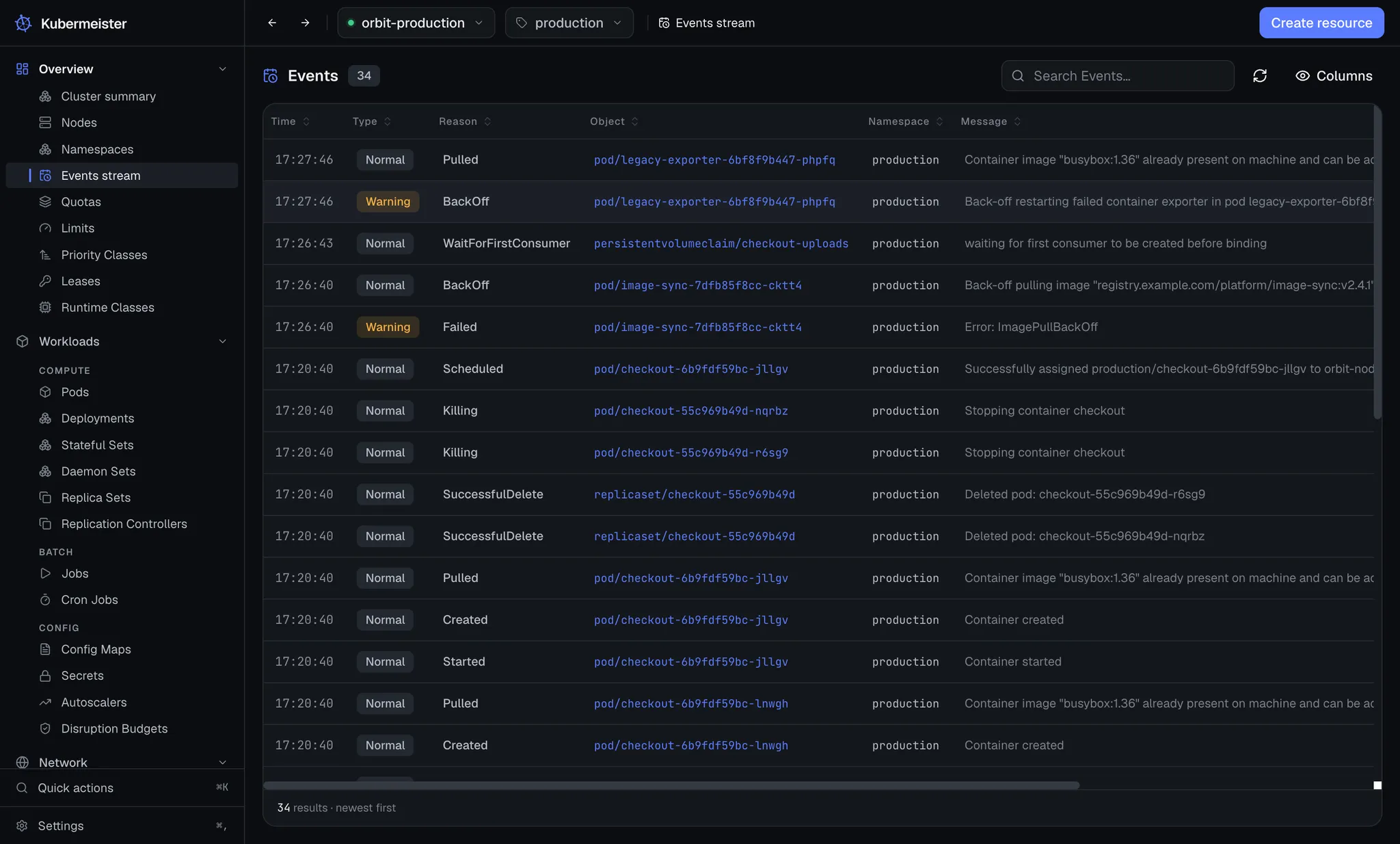
- Pending and failed pods come from
status.phasefield selectors, so the API server does the filtering. - Crash loops and image pull failures come from the recent Warning
BackOffevents the kubelet emits for them, deduplicated per pod.
That second one is not an optimisation, it is a correctness point: a CrashLoopBackOff pod is phase
Running, so no field selector finds it. The event is the only cheap signal.
What is deliberately missing
Section titled “What is deliberately missing”There is no high-restarts alert, because healthy pods’ restart counts are never read. Adding one would mean listing every pod in the cluster on a timer, which is exactly what the rest of the app avoids.
Node and workload alerts
Section titled “Node and workload alerts”Nodes that are not ready, and workloads whose available replicas do not match what they want, are found from the lists those screens already watch.