Detail pages, events and describe
Every kind’s detail page has the same shape: a header naming the object, over a left rail of tabs grouped into Observe, Inspect and Connect.
Overview
Section titled “Overview”The properties that matter for that kind, as labelled pairs, with the status badge and any usage metrics beside them.
Events
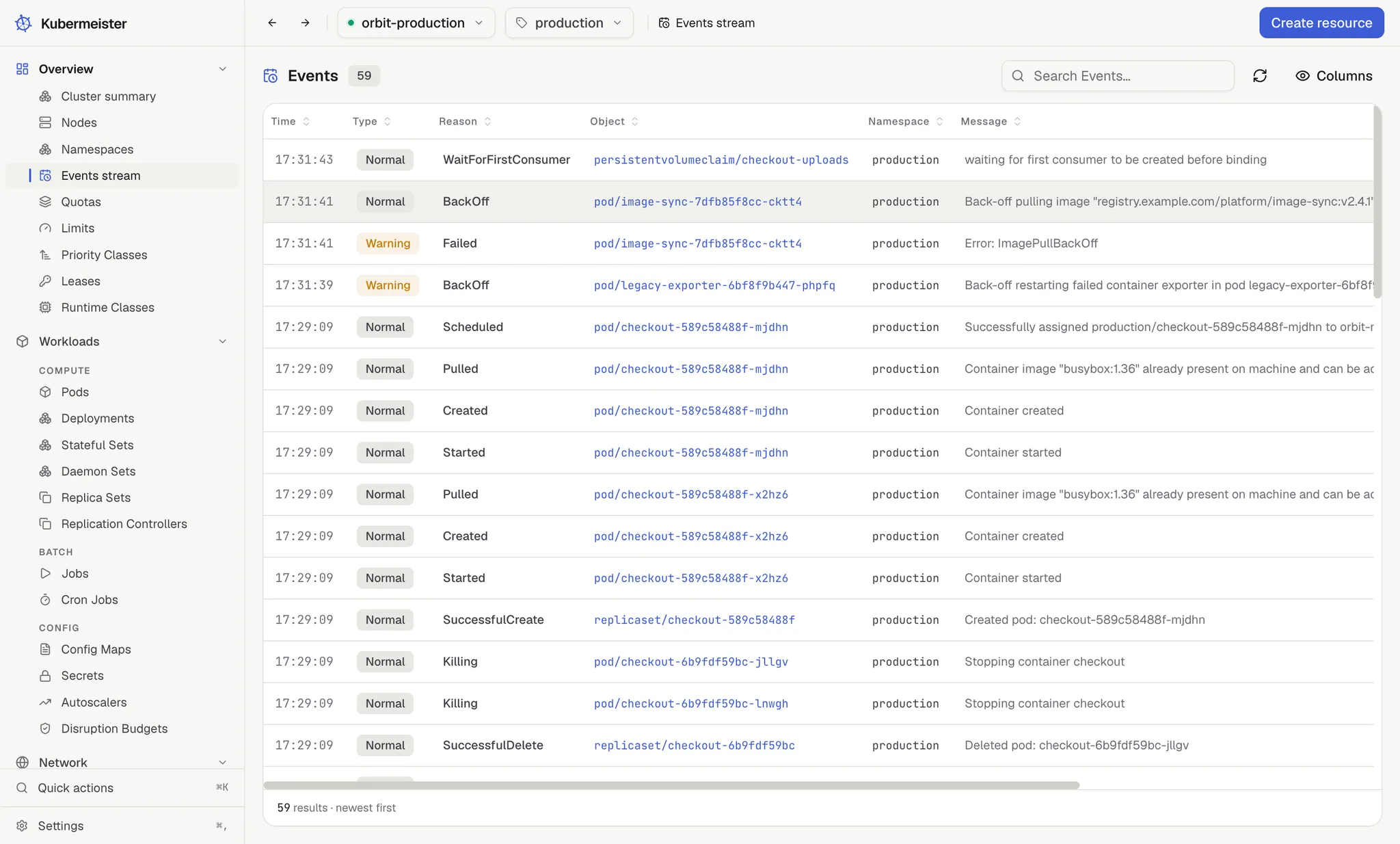
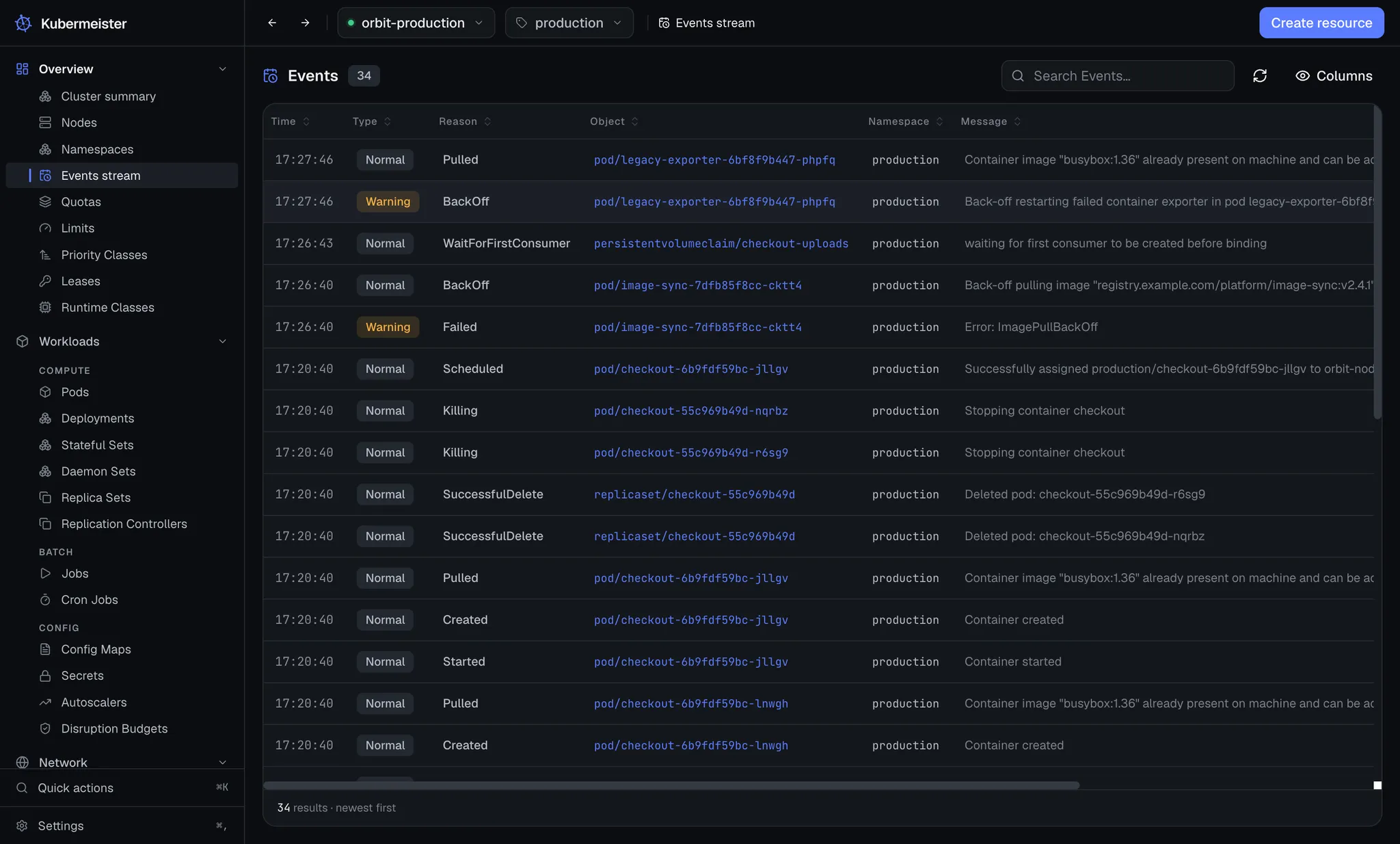
Section titled “Events”Events for this object, newest first. They come from a field-selected query against the object itself rather than a scan.
Labels and annotations
Section titled “Labels and annotations”Labels, annotations, and the two parts of metadata no view model carries: the controlling owner
reference, and the finalizers holding a deletion open. That card is added by the detail layout
itself, so it is present on every kind rather than on the ones that remembered to pass it.
Describe
Section titled “Describe”Pods and nodes have a Describe tab. Everything else has its manifest, which says the same thing in YAML.
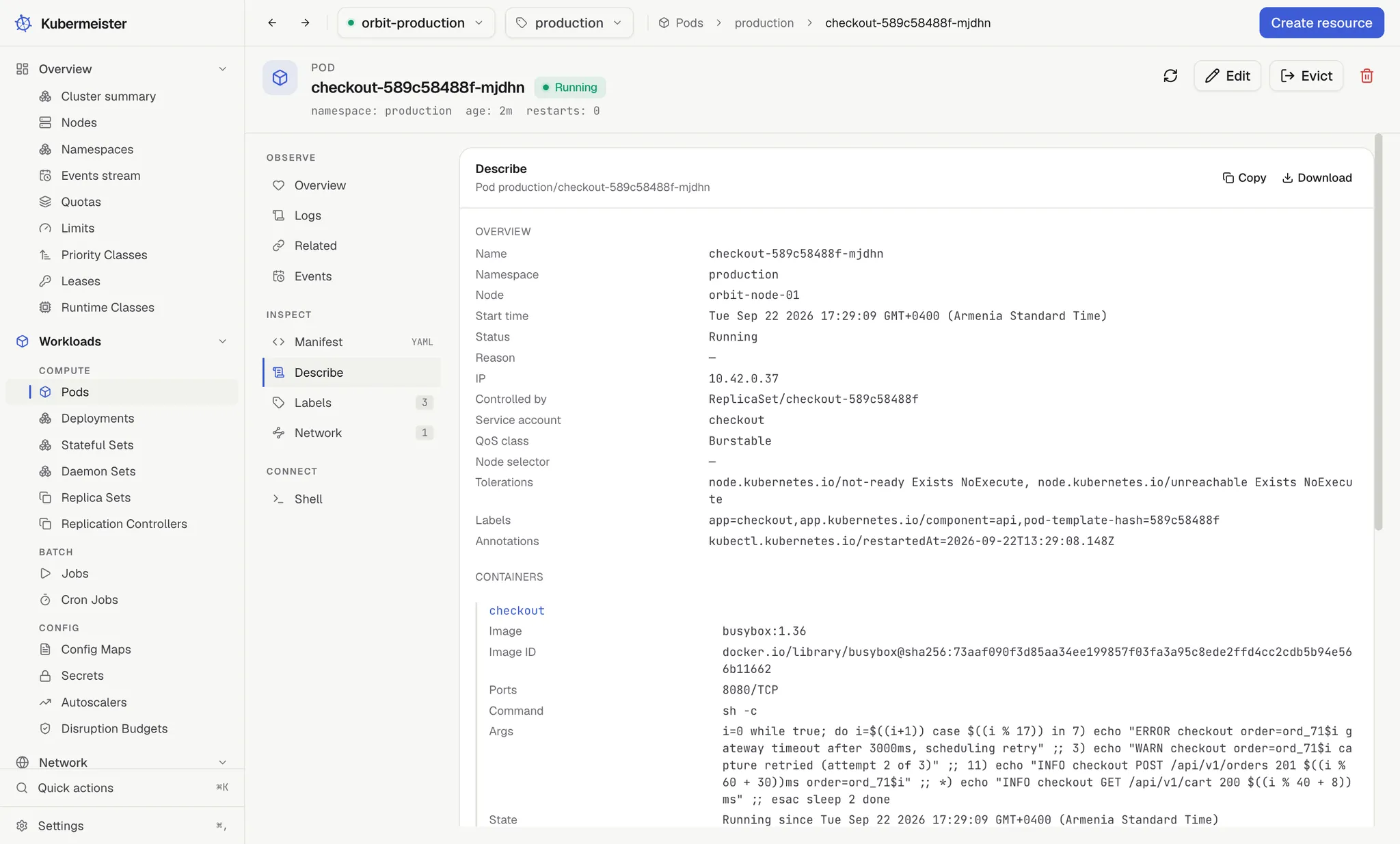
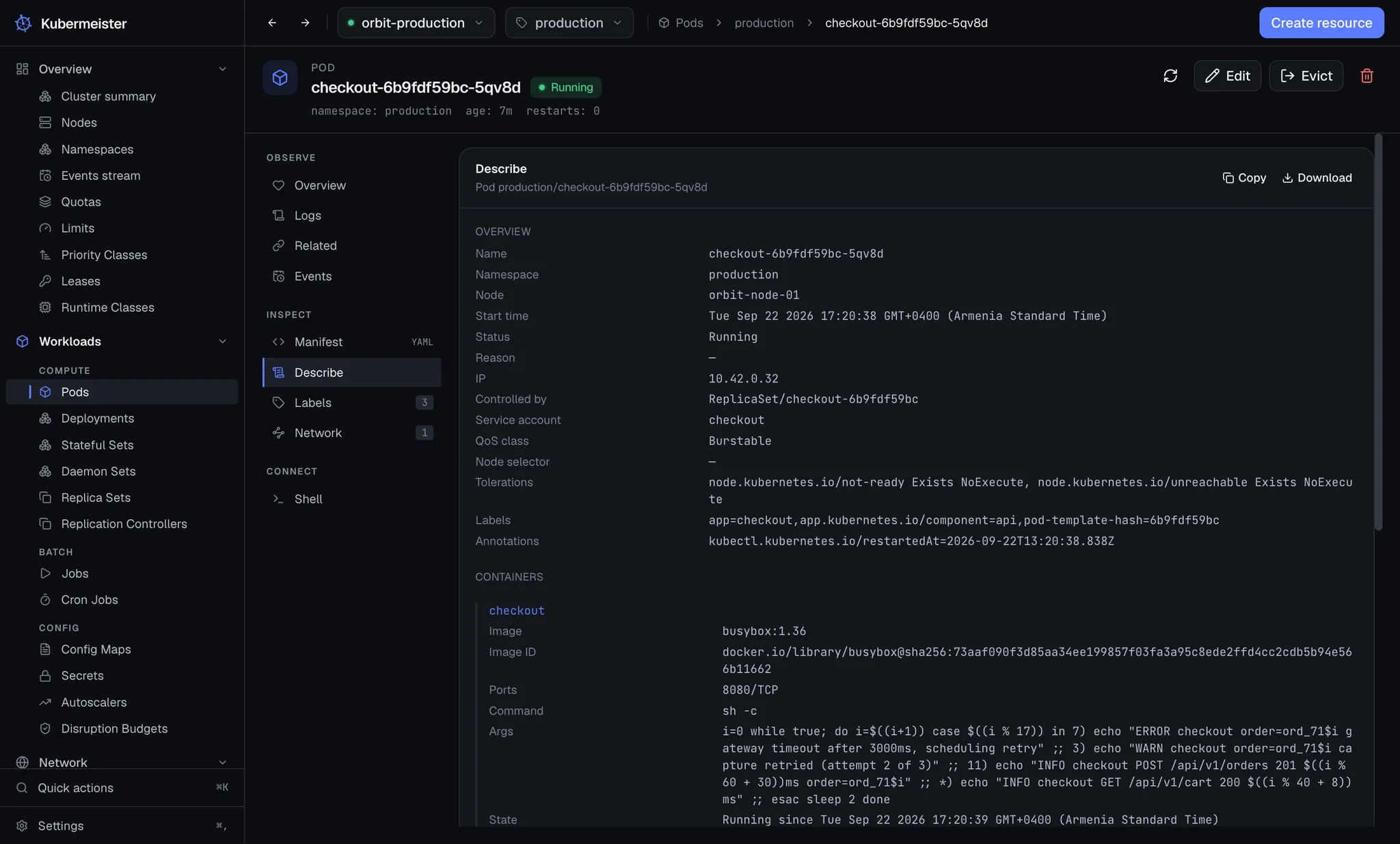
Describe answers a structured document — sections of labelled rows, with blocks for the parts that repeat — rather than pre-rendered text. The screen lays it out, and the copy and download buttons render the very same document to text, so what you paste is what you read.
Related objects
Section titled “Related objects”The Related tab answers what else this object is tied to, and every link says why: “mounted as volume”, “envFrom in web”, “selects these pods”, “runs as”.
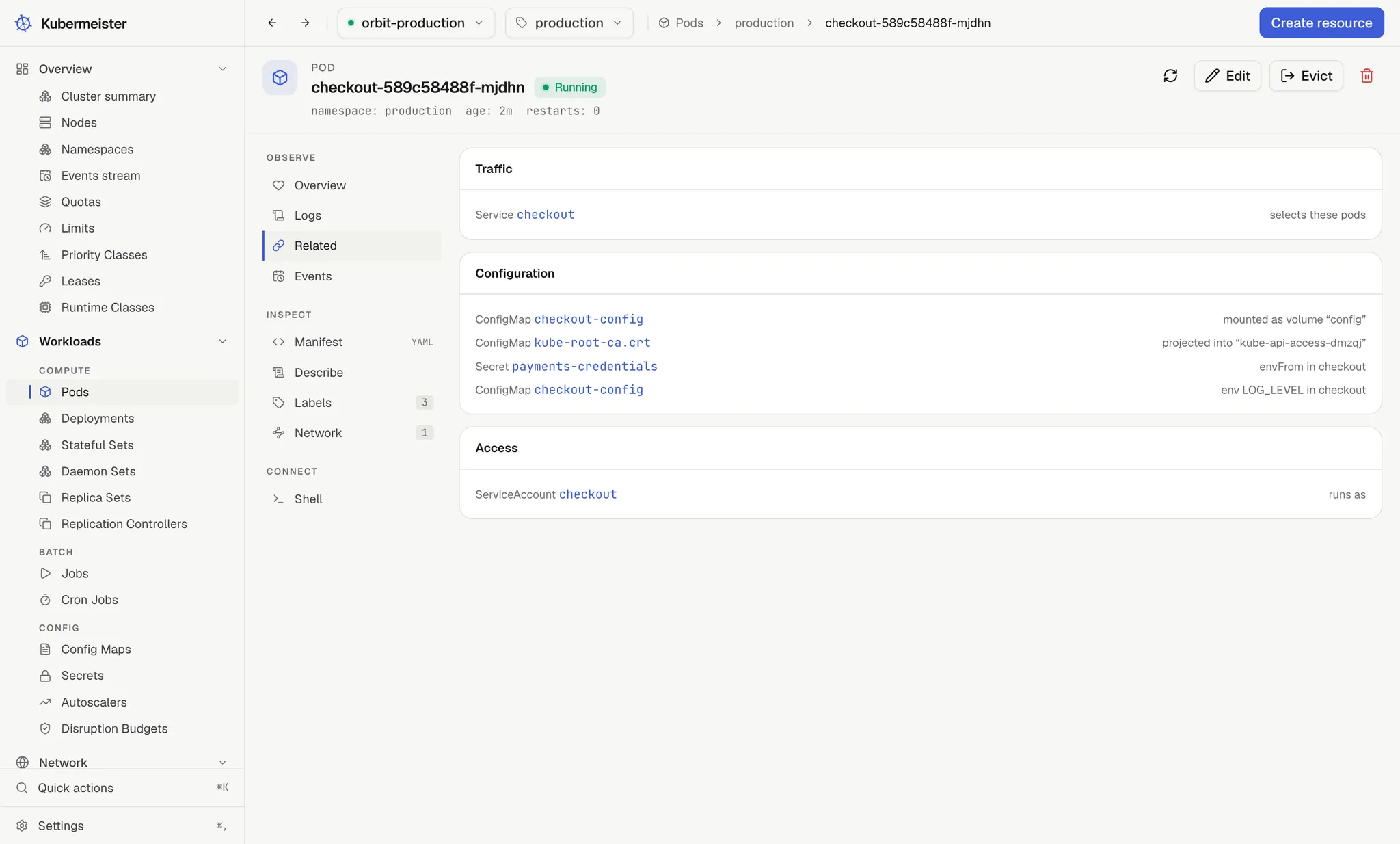
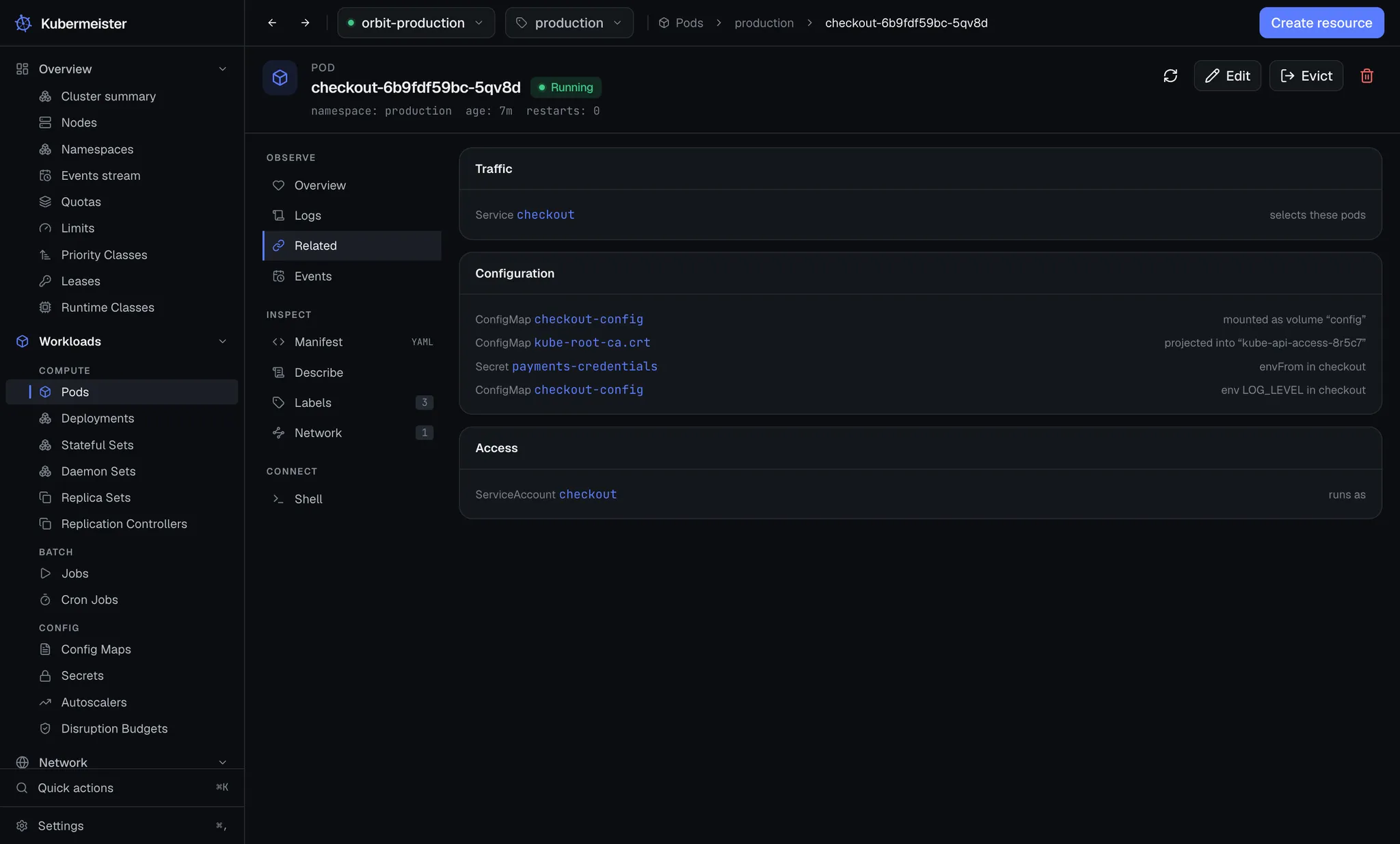
A relation that cannot be explained is a guess, so everything comes from the object’s own spec or from a selector that actually covers the labels of what it matched — never from names that merely look alike. Pods come first, because a pod is where every relation is concrete.
Ownership
Section titled “Ownership”Ownership is resolved through the API’s own owner references, never label selectors. A selector says which pods a controller would adopt; the references say which it has, and two workloads can share labels but never a reference.
A pod walks up through the one intermediary its kind allows — a ReplicaSet to its Deployment, a Job to its CronJob — and stops. A link is only a link when there is a screen for that kind; a broken link higher up ends the chain rather than failing the whole card.