Port forwarding
Start a forward from a pod or a Service. Every forward is then listed in the top bar and stopped from there, rather than from the page that happened to start it — because that page is often not the one you are on when you want it gone.
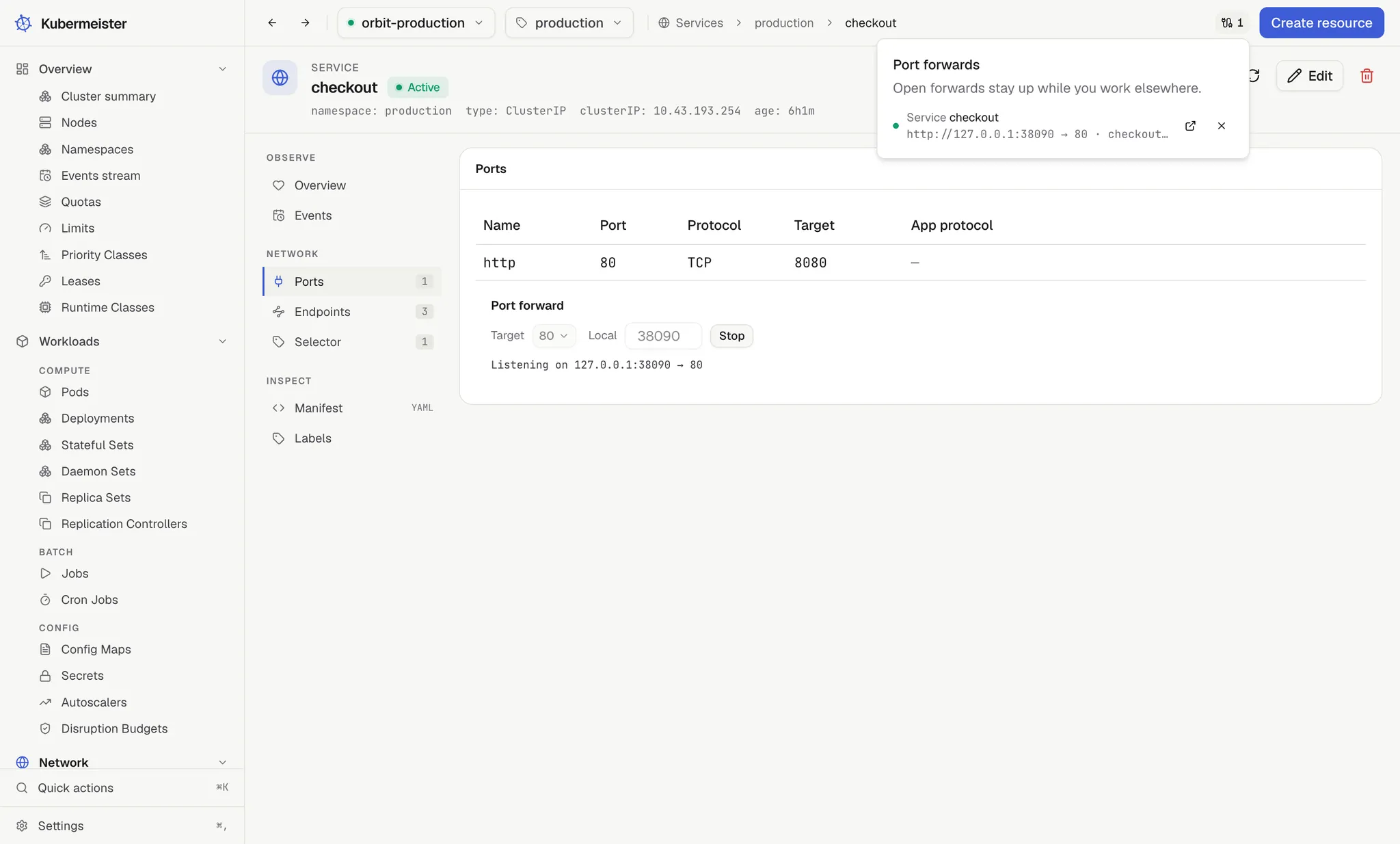
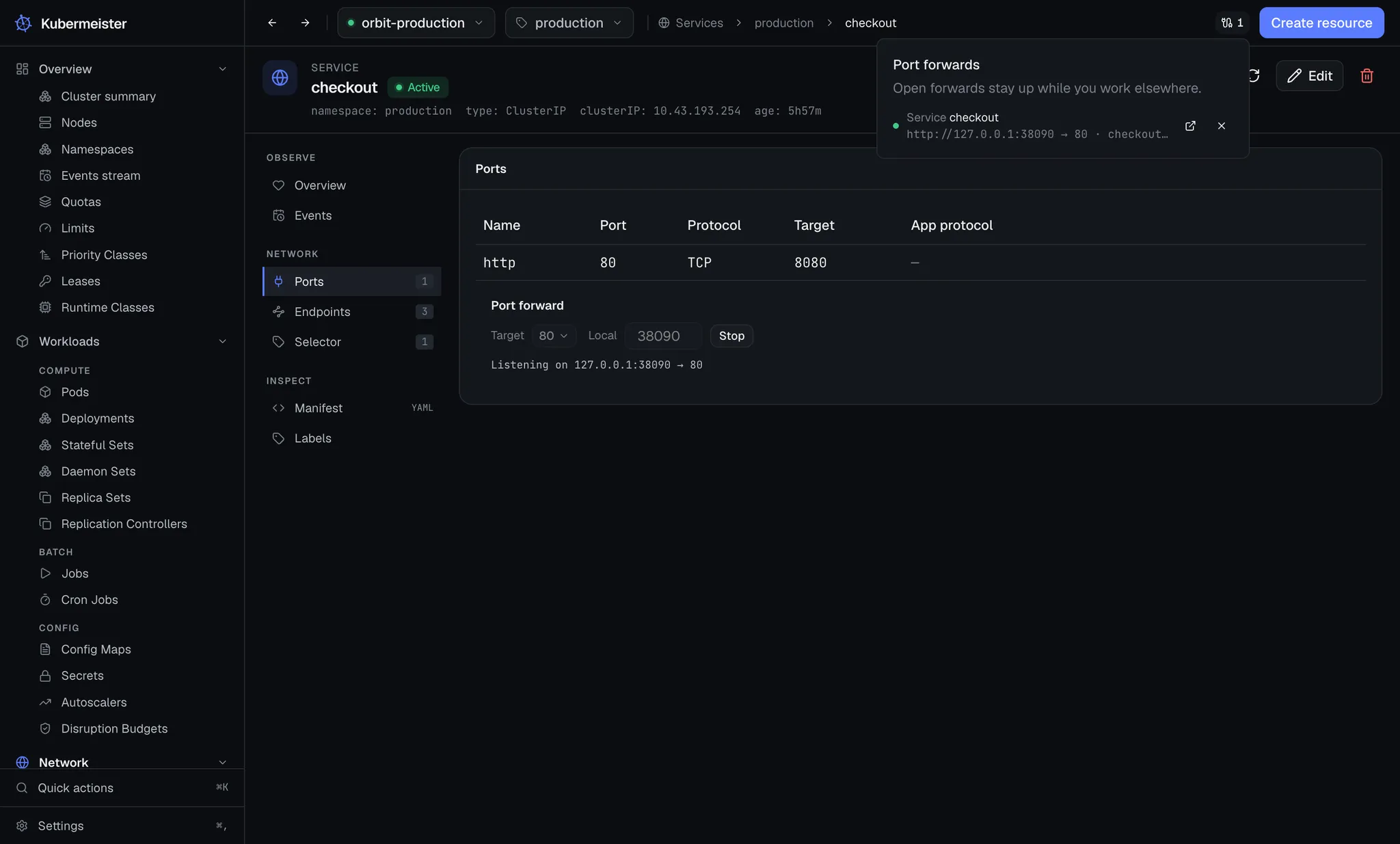
Forwarding to a Service
Section titled “Forwarding to a Service”A forward may target a Service, and the app resolves it to a ready endpoint per connection.
That is the difference that matters: a forward aimed at one pod ends when that pod is replaced. A forward aimed at a Service survives the rollout, because each new connection picks a pod that is ready right then.
Forwards live outside the page
Section titled “Forwards live outside the page”Like shells, forwards are held outside the interface’s component tree, so navigating away does not end one. Only stopping it, or losing the connection, does.
Remembered, but never reopened unasked
Section titled “Remembered, but never reopened unasked”Forwards are remembered per context in your settings, and are only ever offered again when you come back to that context.
They are never reopened automatically. Reopening a local port on your machine without asking would be the app deciding something about your machine, which is not its call.
A context switch stops them all
Section titled “A context switch stops them all”Every stream shares the one live connection. Switching context, choosing a different kubeconfig, or changing the proxy or CA bundle ends every forward with an error naming the reason.