Resource lists
A list screen asks the cluster for one thing: its kind, in its namespace. Everything else you can do on the screen happens on the rows already there.
They are live
Section titled “They are live”Lists stay current through a watch, not a timer. One informer serves every screen watching the same kind and namespace, so opening a second screen on the same list replays the informer’s cache instead of opening a second watch and re-listing. The informer stops when its last subscriber goes.
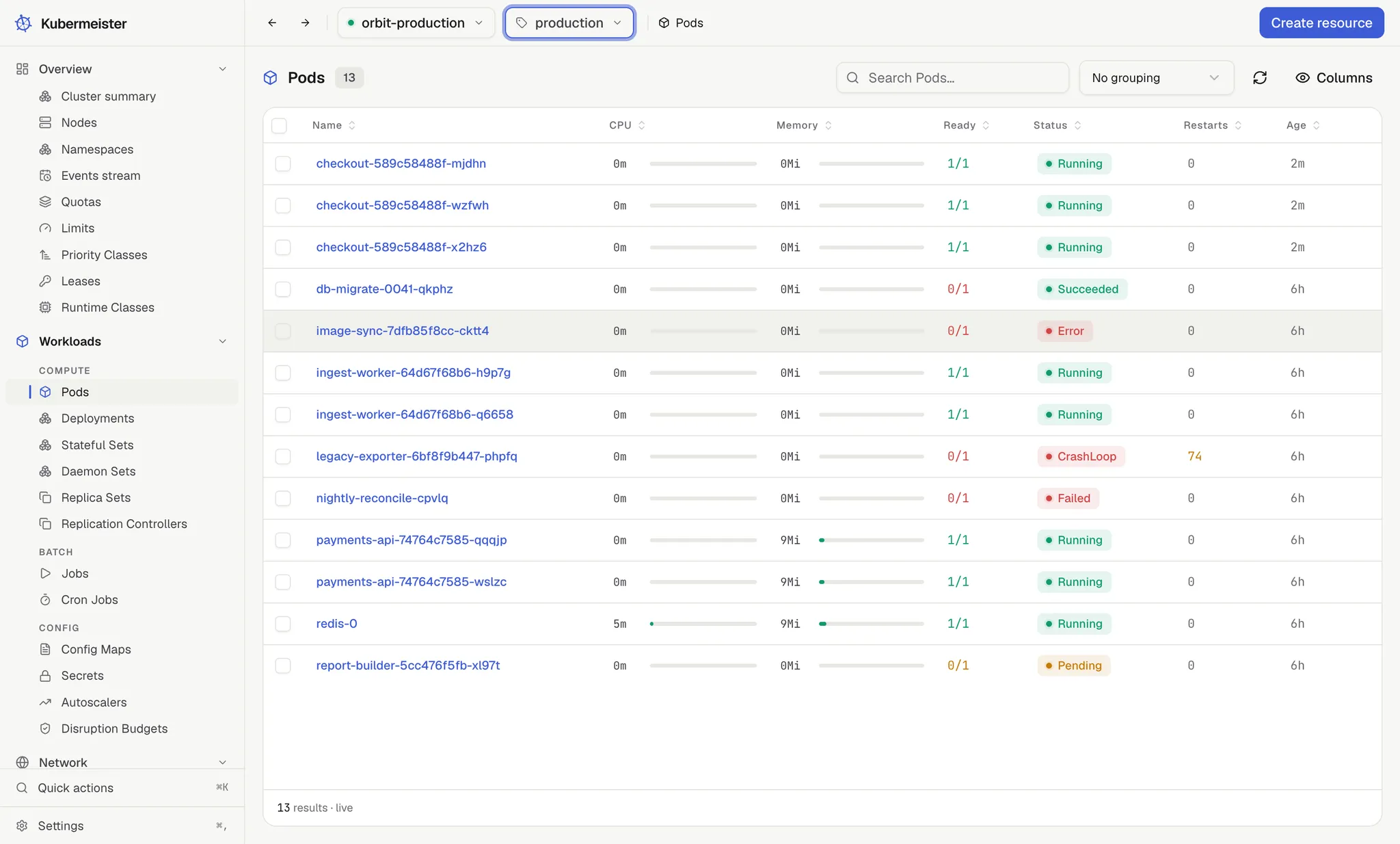
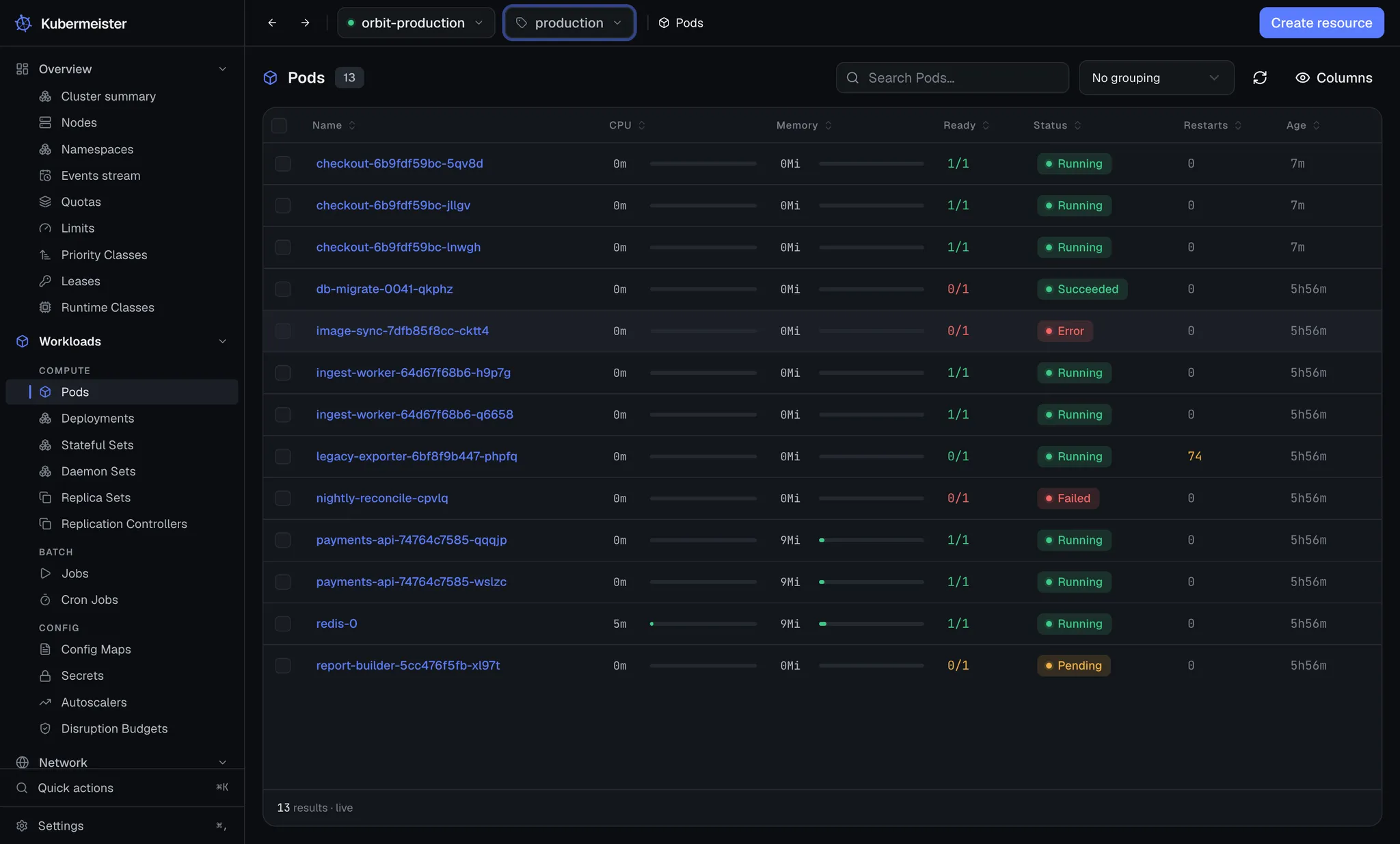
A kind whose definition a cluster need not have — volume snapshots, for instance — has no watch source and is polled instead, at the cadence in Settings → Data.
Searching
Section titled “Searching”The search box narrows the rows on screen against the columns on screen. Nothing about it reaches the API server, which is why it is instant and why it costs the cluster nothing.
Columns
Section titled “Columns”Which columns a list shows is a preference about this window, like the theme, so it is stored locally per screen rather than in your cluster or an account.
Typical columns are the name, a status badge with a tone from that kind’s own vocabulary, age, a ready ratio, and usage meters where metrics-server provides them.
Grouping
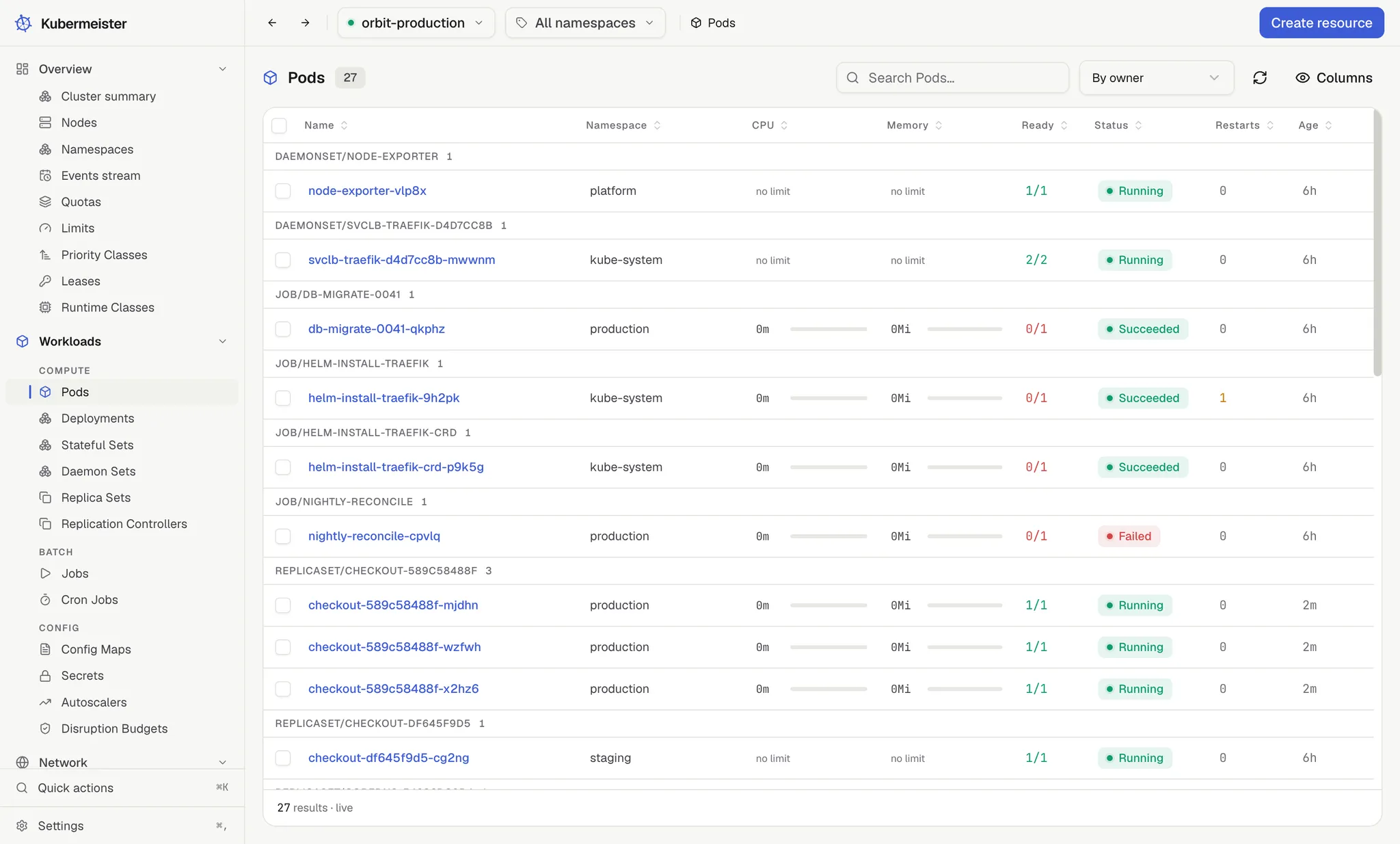
Section titled “Grouping”Pod rows carry the controller that owns them, which is what lets the cluster-wide pod list group by node or by workload. Grouping interleaves heading rows into the virtualised list rather than nesting tables, so it stays as cheap as the flat list.

Why they stay fast
Section titled “Why they stay fast”Only the rows in view are rendered. A list costs the size of your window, not the size of your cluster, and that is locked in by a test that counts mounted cells rather than milliseconds.
There is also a rule about what is not listed: no screen lists the cluster’s pods just to show a count. The Namespaces and Nodes lists carry no pod column, the cluster summary shows no pod total, and the namespace selector shows names only. On a busy cluster, one such count is megabytes on every refresh.
Pods are listed where a detail needs them, scoped to that object: a namespace’s own screen, a node’s screen, a workload’s screen. The Pods screen is the only whole-cluster pod list.
Exporting a selection
Section titled “Exporting a selection”Select rows and save them as one YAML file, one document per object. The export strips what the
server owns — status, the bookkeeping parts of metadata, and the owner reference naming a uid
only the originating cluster ever issued — so the file applies elsewhere. Where it lands is a native
save dialog’s answer.