Shell into a pod
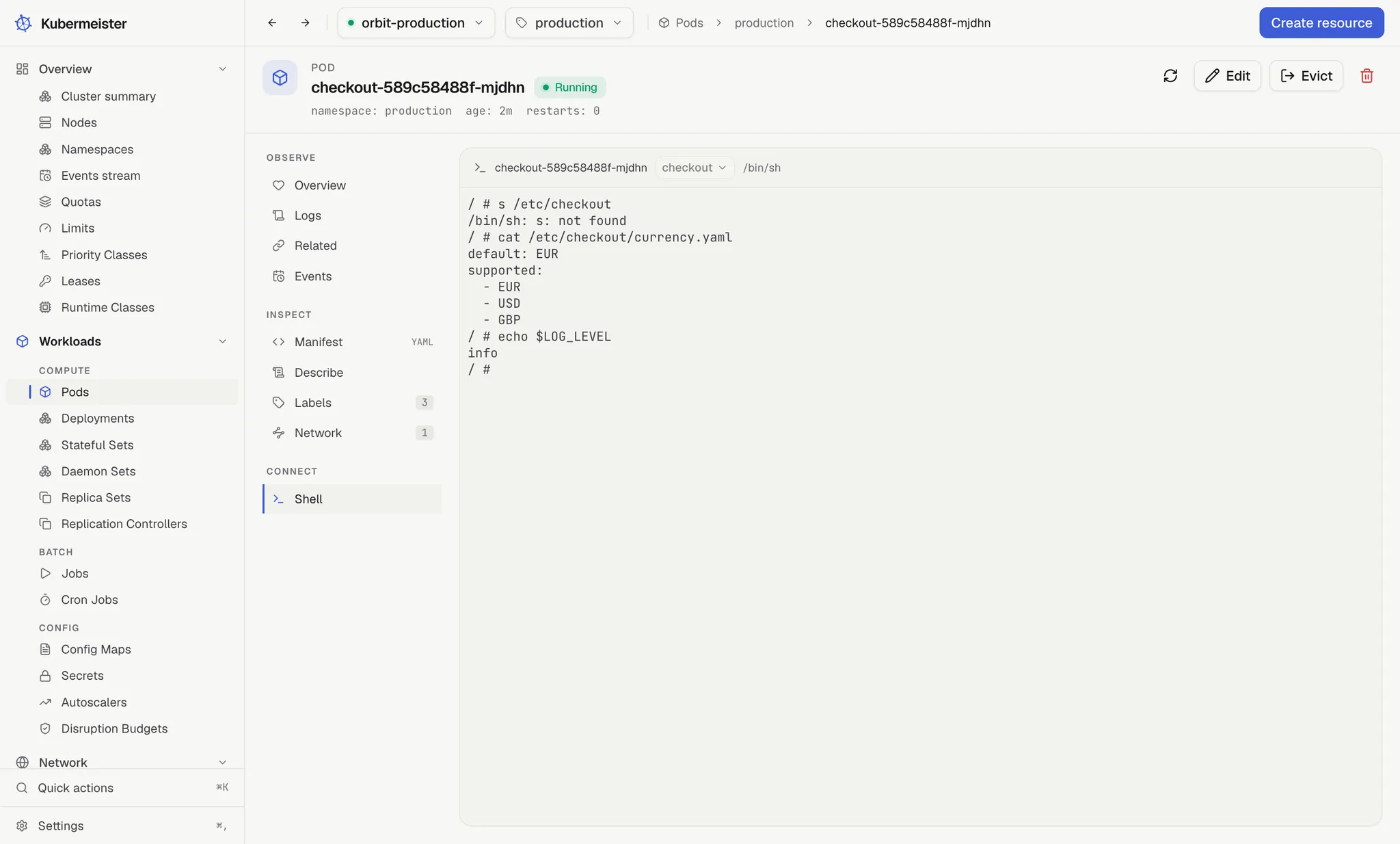
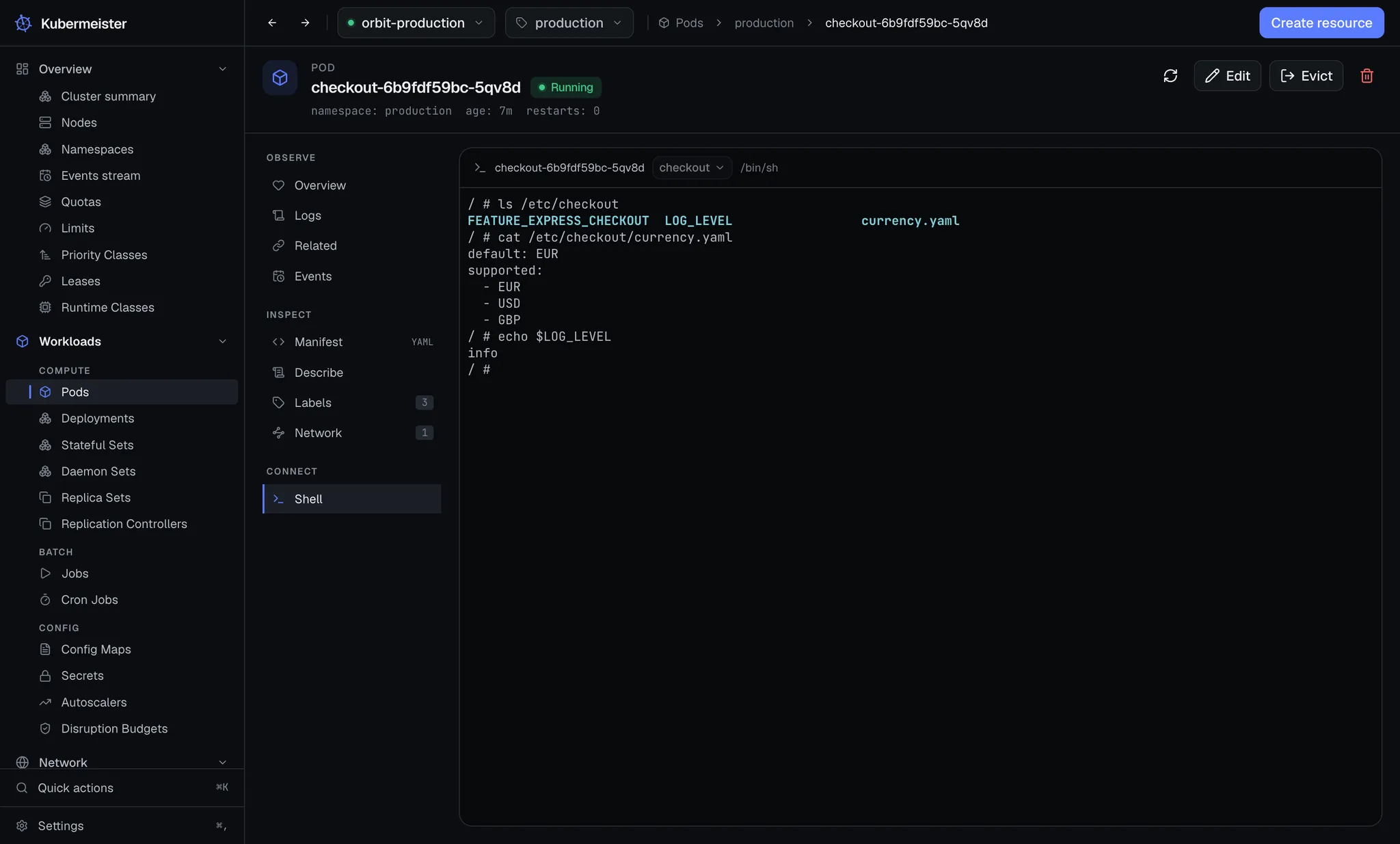
A pod’s Shell tab is an exec session into that pod. It opens when the tab opens and ends when you leave it.
Why it works that way
Section titled “Why it works that way”A shell belongs to its pod. Leaving the pod is how a shell is closed, which means a terminal is never left attached to a cluster nobody is looking at.
The tab is deliberately not kept mounted in the background, unlike Logs. Merely opening a pod’s page must not exec into it.
Containers
Section titled “Containers”Pick the container from the tab. A pod’s containers come back as one ordered list carrying a role — init, app or ephemeral — so the picker labels each without you having to know the shape of the pod spec.
The terminal has its own two palettes, because a terminal needs literal colours and the app’s theme can flip while a session is running.
What the app will not do
Section titled “What the app will not do”The app opens no other way in:
- it attaches no debug container;
- it runs no privileged pod on a node;
- it carries no files across the exec channel.
kubectl debug and kubectl cp are where those belong. The app is not quietly a way around your
RBAC.
Ending a session
Section titled “Ending a session”Leaving the tab ends it. So does switching context, changing the kubeconfig, or changing a network setting — every stream shares the one live connection, and none of them outlive it. You get an error naming the reason rather than a terminal that has silently stopped responding.