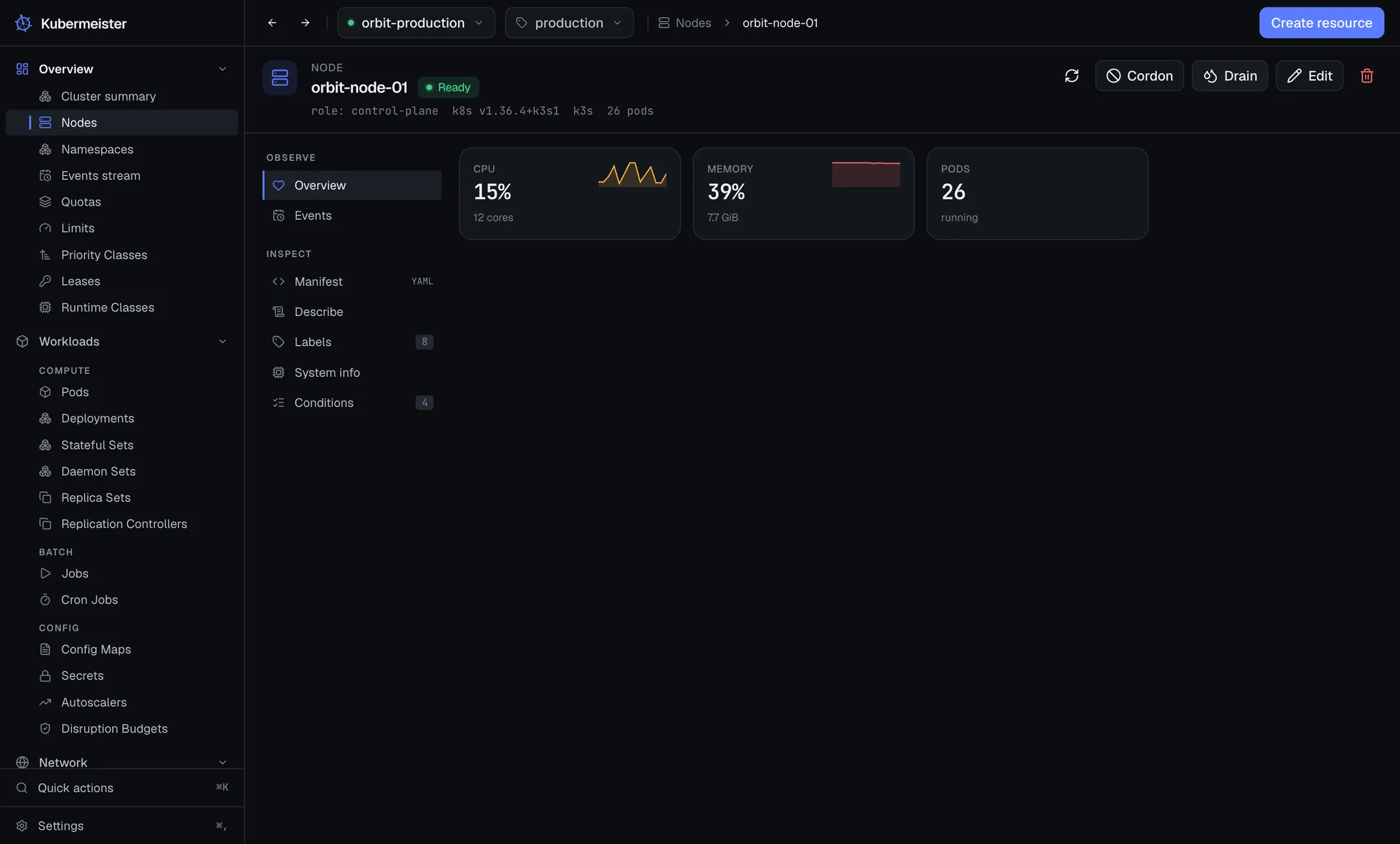
Cordoning and draining nodes
Cordon
Section titled “Cordon”Cordoning patches spec.unschedulable and nothing else, so it reads the same to every other tool.
A drain writes for minutes and reports as it goes, so it is a stream rather than a single call: one line per pod, as each one leaves.
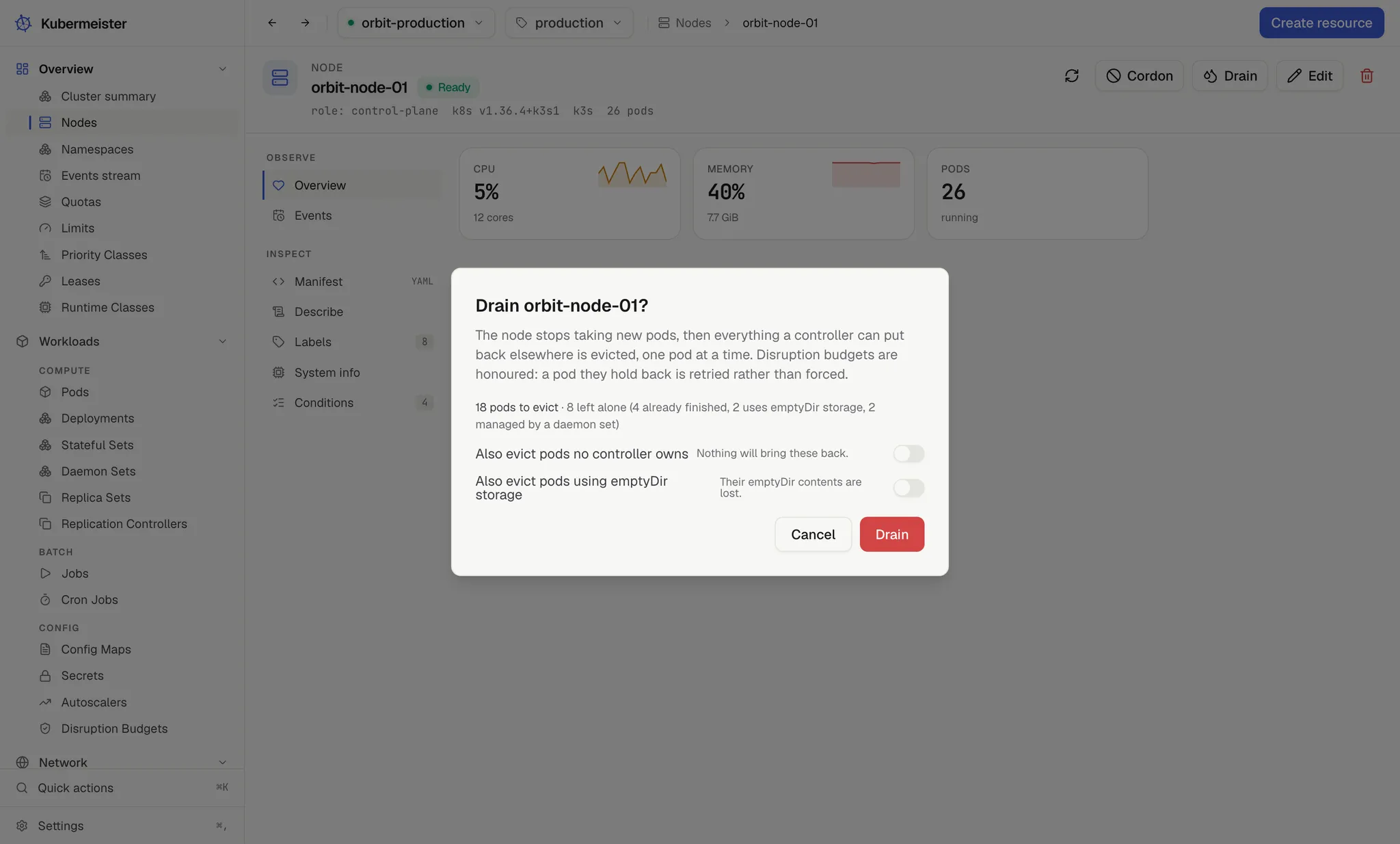
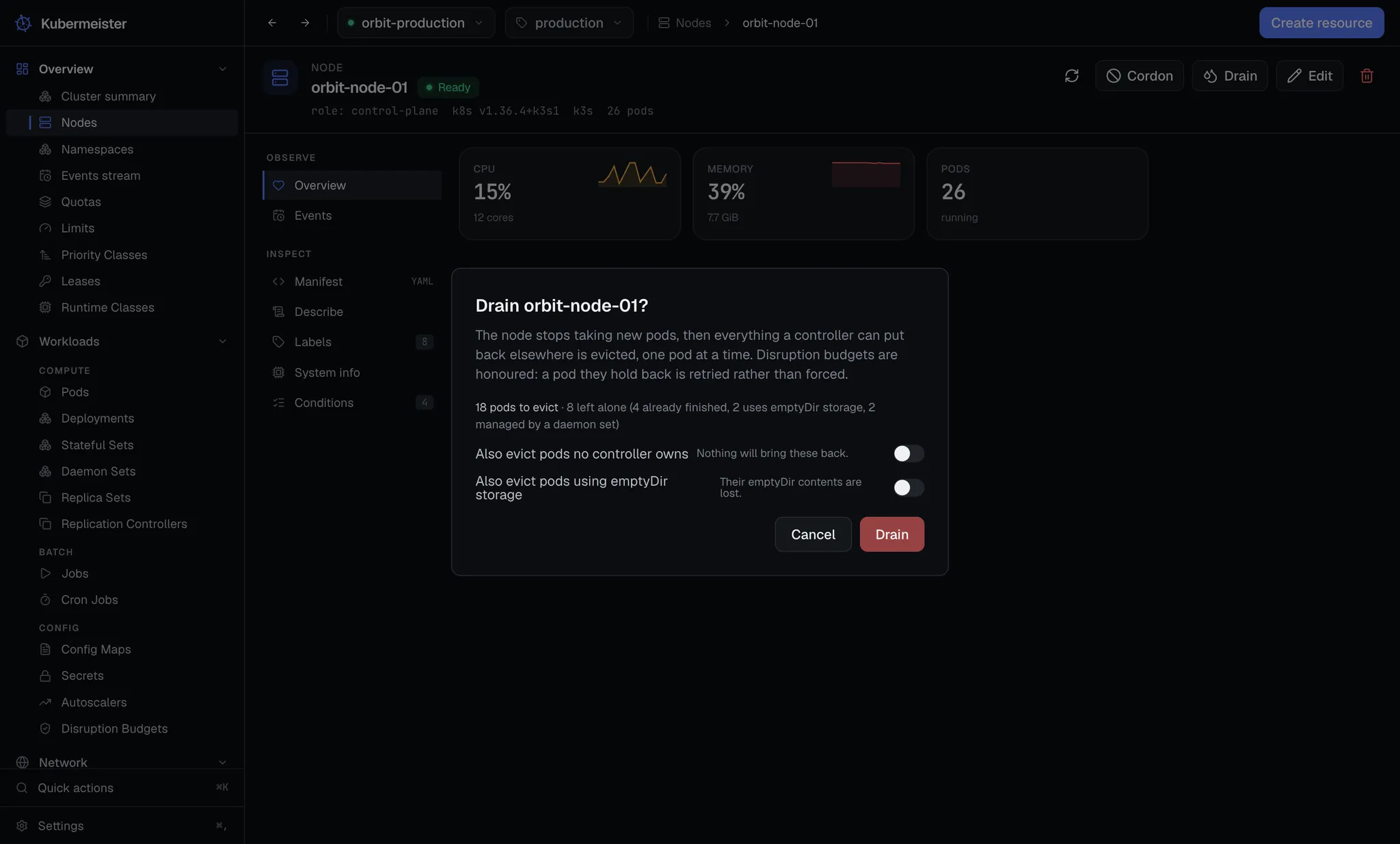
The plan comes first
Section titled “The plan comes first”Before anything happens, the app answers what a drain would do for the options you have chosen. When you start it, the drain re-derives that same plan itself — so the screen can never promise one thing and the app carry out another.
Eviction, not deletion
Section titled “Eviction, not deletion”Pods are removed through the eviction API, which is what makes PodDisruptionBudgets matter. A 429 from the API server means “not now”, not “failed”, so the loop waits and retries against its own two-minute deadline per pod.
That loop deliberately runs outside the ordinary read timeout: a ceiling meant for a single read is the wrong ceiling for something whose job is to keep asking.
Stopping
Section titled “Stopping”Stopping ends the stream at once and leaves the node cordoned. Undoing that is your decision, not the app’s — a drain you interrupted is rarely one you wanted fully reversed.
PodDisruptionBudgets
Section titled “PodDisruptionBudgets”Budgets are listed as their own kind. A budget that allows no disruption reads Blocked, because a drain stops on it and no count says so on its own.
Node detail
Section titled “Node detail”A node’s screen lists the pods actually on it, selected by spec.nodeName, along with its
conditions, capacity and allocatable resources, and its usage charts.